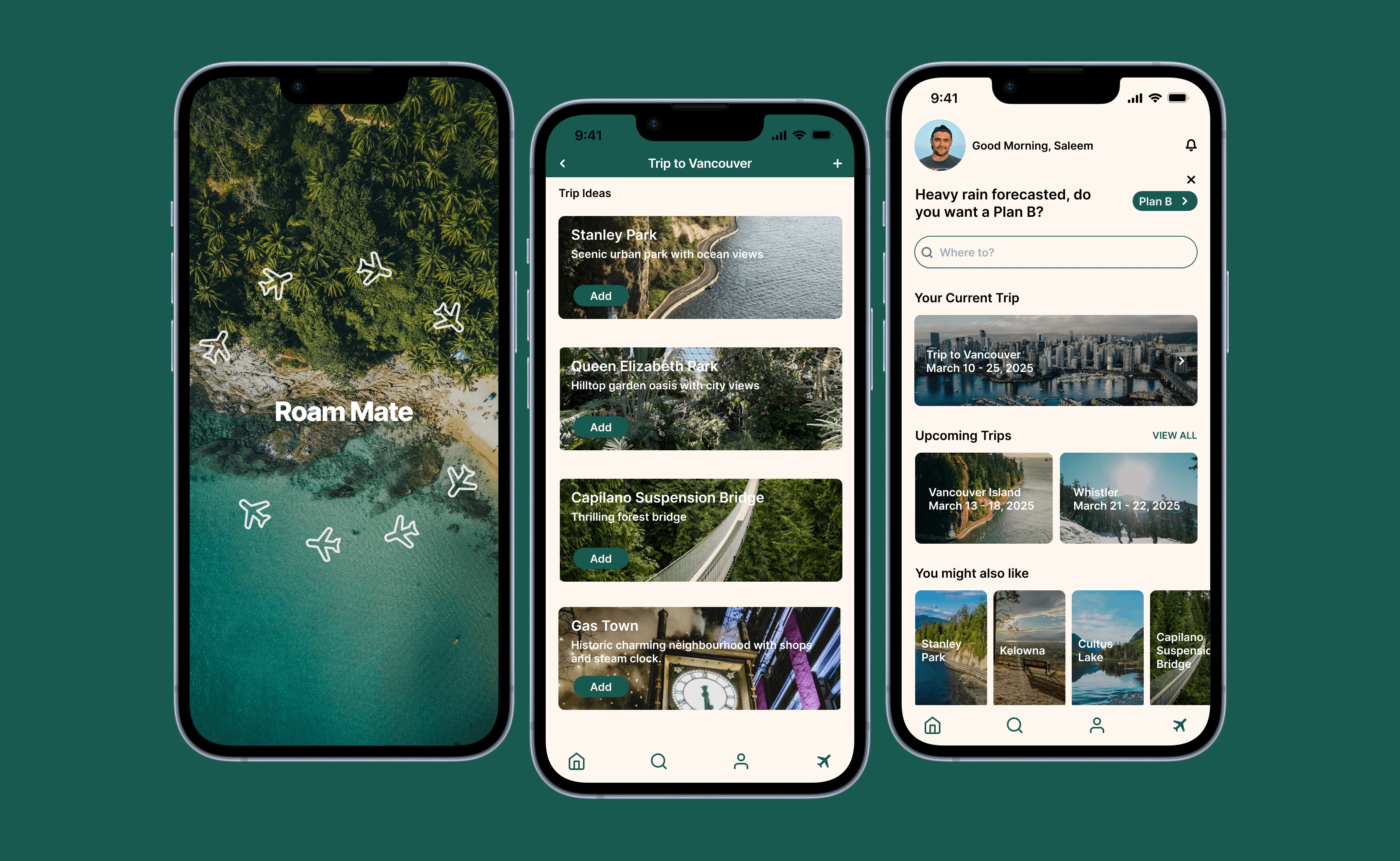
I actually came into this project with a completely different problem in mind. As someone from a country with a weak passport, I wanted to make the visa documentation process less of a nightmare for travellers like me. But the research had other plans.
People were not struggling to plan their trips. They were struggling when those plans fell apart. A museum closed on a random Tuesday. Rain in Vancouver, a city built almost entirely for the outdoors. A toddler who decided noon was nap time. One disruption, and the whole day was gone.
That's not a planning problem. The problem was what to do when the plan stopped working. And that's what I set out to solve.
To understand the problem better, I spoke to leisure travellers, and the same story kept coming up, just with different details. Juvenita travelled to see a museum - closed when she got there. Saleem had pre-booked tickets to an outdoor attraction — rained out, ended up at the hotel's spa. Fahad just wanted a planner that could roll with him, the moment something changed.
It was clear, people were not asking for another planning tool. They were asking for a way to recover when planning wasn't enough.
Research
I approached the research in two ways: talking directly to travelers, and studying what already existed in the market.
After speaking to travelers, I mapped everything I heard to find the patterns.
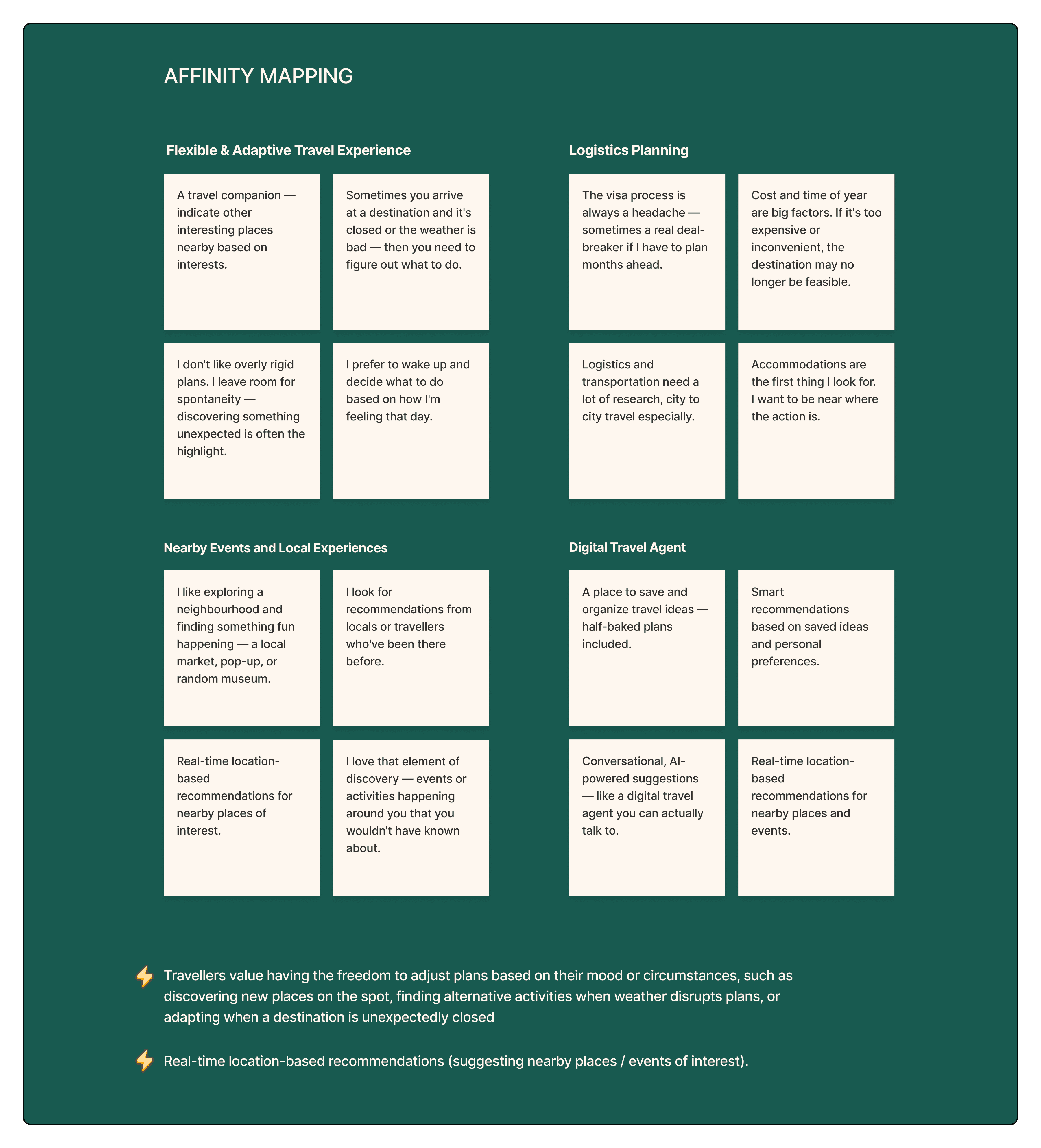
Turns out, planning wasn't even the issue. The real frustration was when things started falling apart, unexpected circumstances nobody even thought to plan for.
To bring that frustration to life, I mapped Saleem's experience — a traveler whose tour gets cancelled due to bad weather.
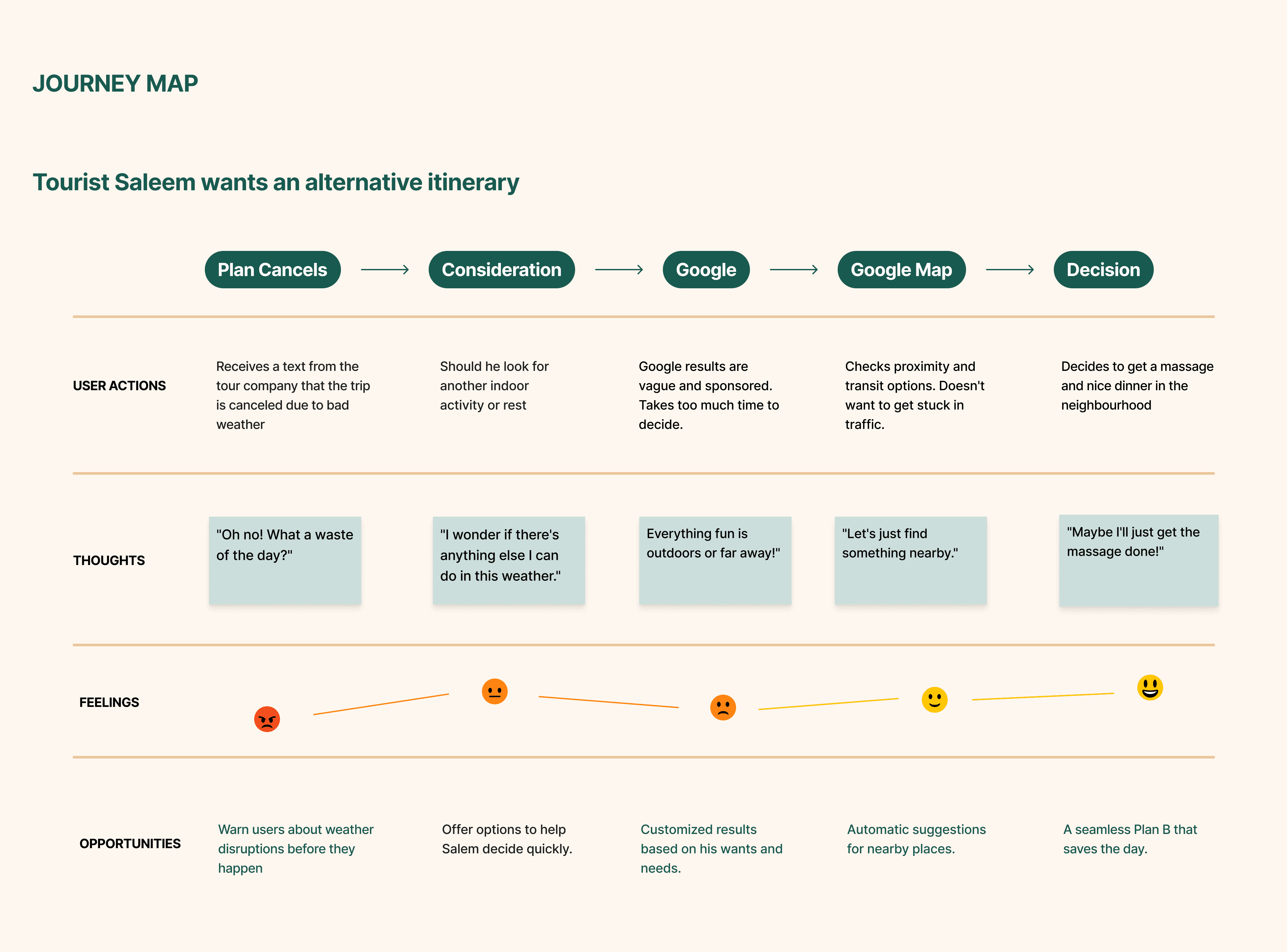
The emotional low point wasn't the cancellation. It was the moment after — standing there with no idea what to do next.
I then looked at what existing apps offered and where they fell short.
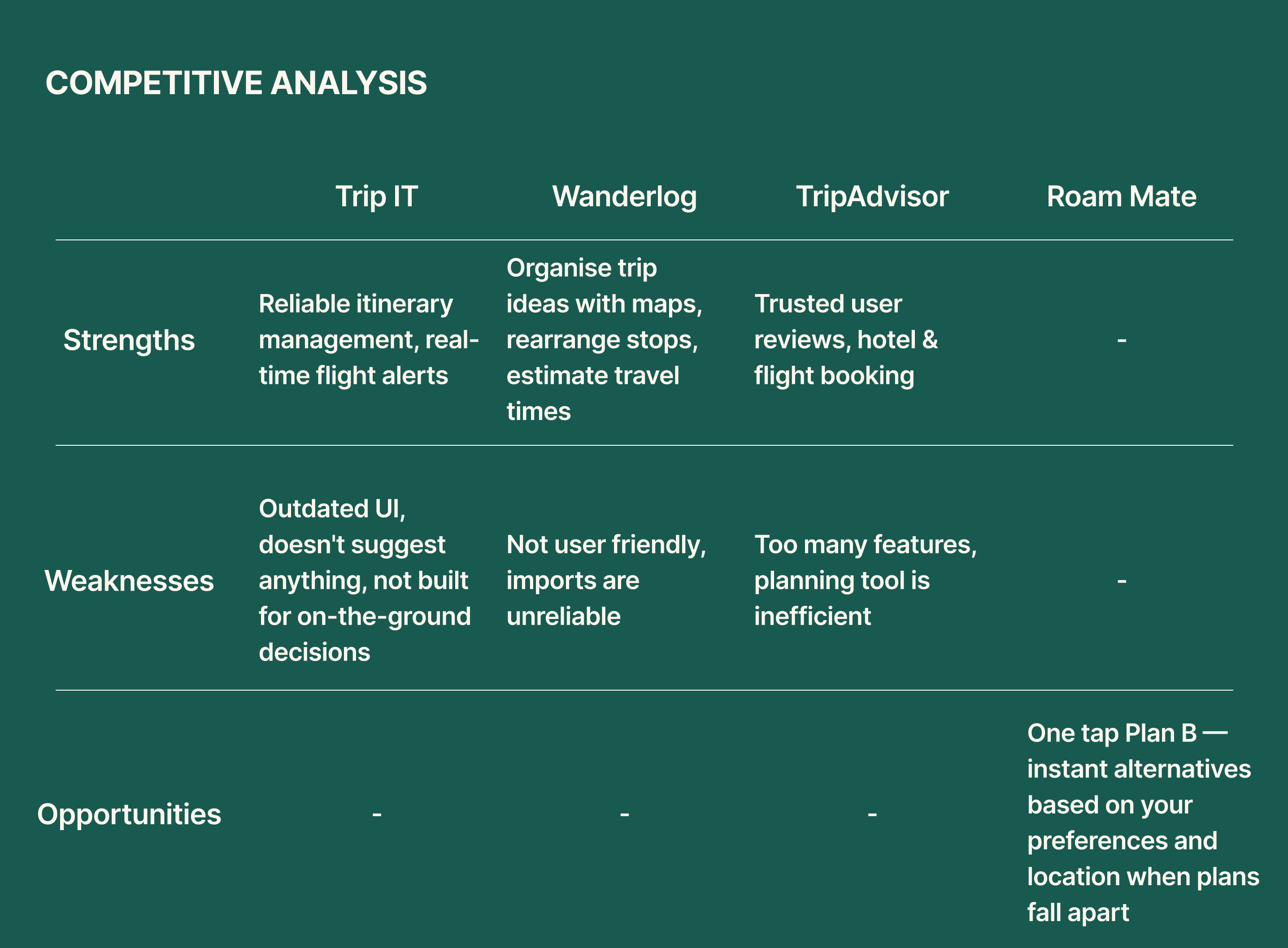
TripIt, TripAdvisor, and Wanderlog are great for planning ahead. None of them had an answer for when things went sideways.
Insights
The research kept pointing to the same two things. Travellers had no backup when their plans fell apart. And nobody was building one. That led me to two questions that shaped everything after:
How might we reduce stress for travellers by offering quick, easy-to-find alternatives when plans are disrupted? How might we help travellers make the most of their time, even with last-minute changes?
Solution
With those questions in mind, I focused on three core features that would give travellers a way out when things went wrong.
The Plan B Button — one tap to activate a fully restructured itinerary when the original plan falls apart.
AI-powered alternatives — suggestions tailored to the user's preferences, weather, and what's actually nearby.
Real-time alerts — so travellers know about closures, bad weather, or disruptions before they're already standing at a closed door.
Design Decisions
After the first round of usability testing, three things stood out that needed fixing.
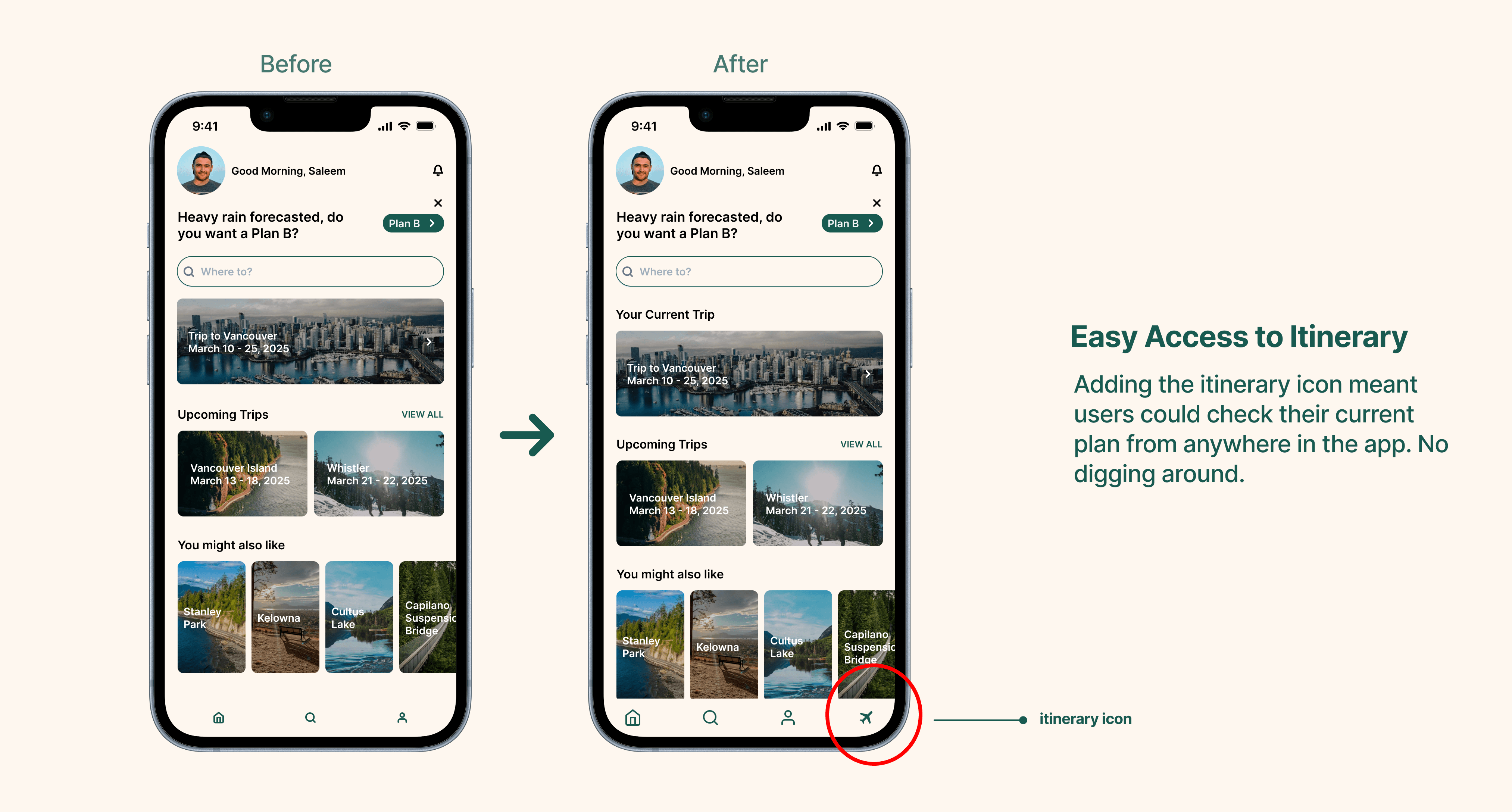
Decision 1: Easy Access to Itinerary
During testing, users had no way to quickly view what they were supposed to be doing that day. The itinerary was buried and was accessible only through future trips or the overall plan view, never right in front of them when they needed it most.
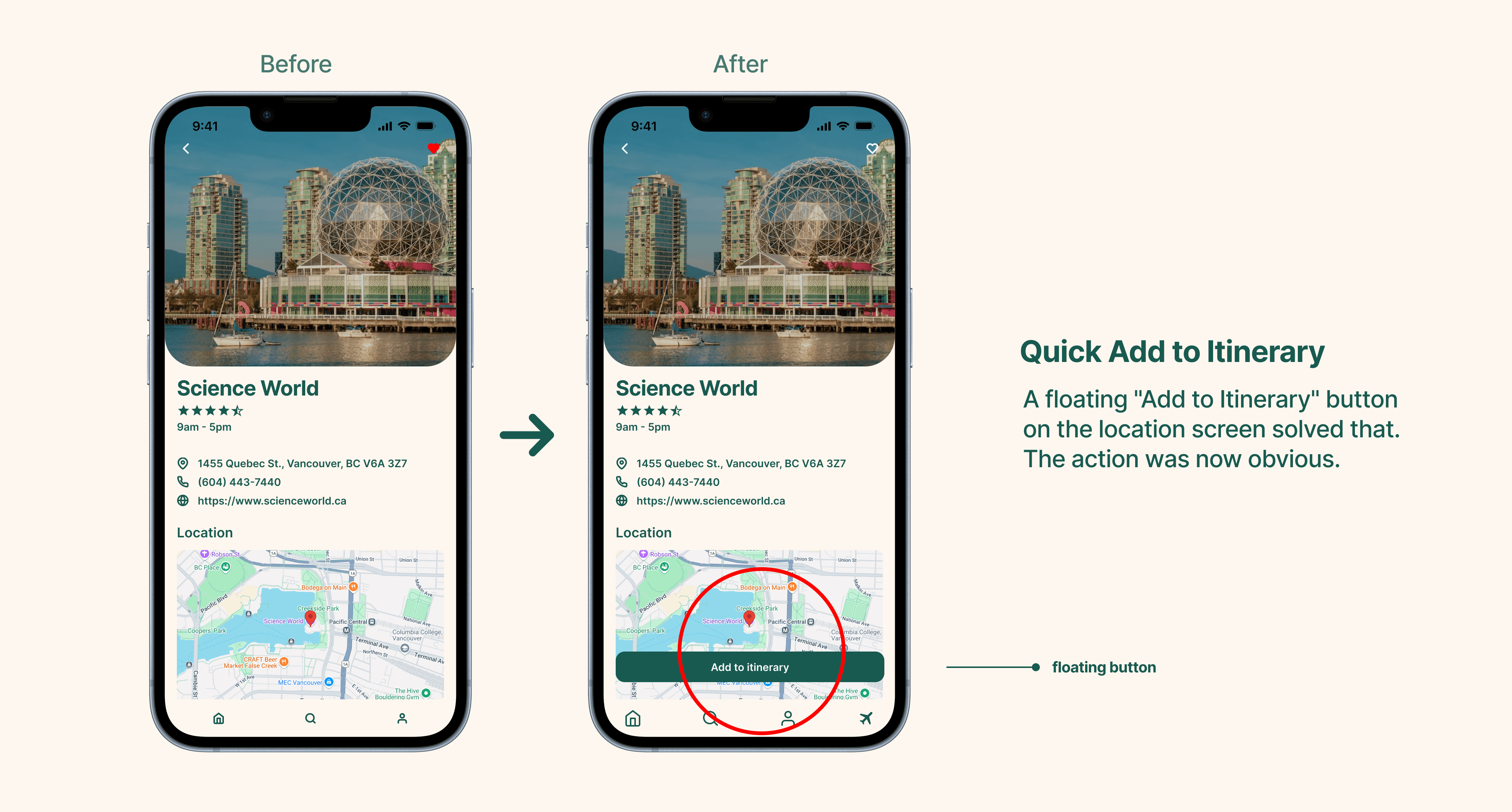
Decision 2: Quick Add to Itinerary
Testers liked a location, say, Science World but couldn't figure out how to add it to their itinerary for the day. The only option was a small heart icon, which they kept confusing with a general favourites feature. Liking something and planning to go there are two very different things, and the design wasn't making that distinction.
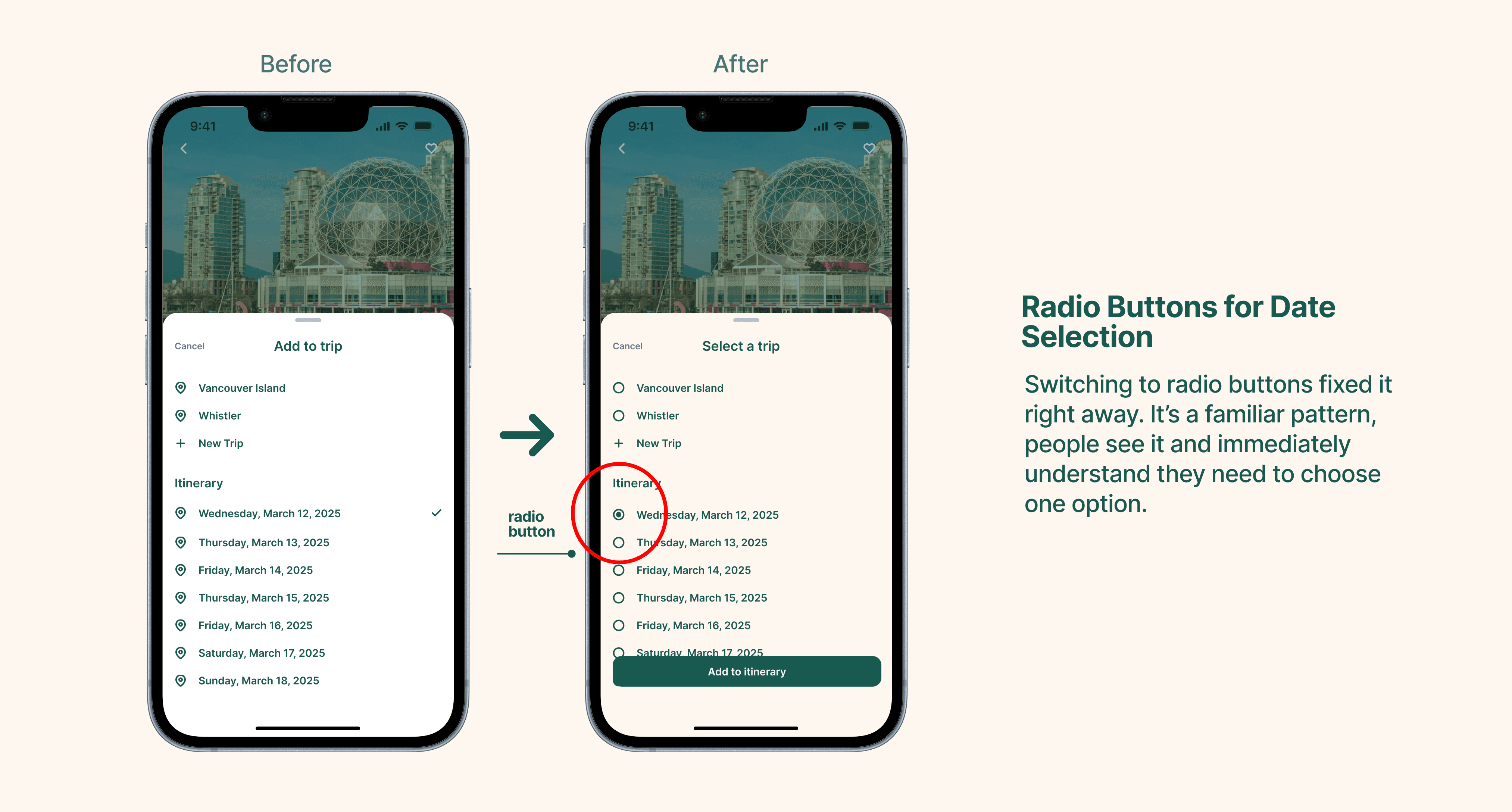
Decision 3: Radio Buttons for Date Selection
When adding a location to their itinerary, testers had to select a date. But the tick marks I had used weren’t reading as interactive. People weren’t sure what to tap, or even whether they had made a selection.
Design Direction
Before moving into the final screens, I defined the visual language for Roam Mate. Honestly, it started with the splash screen, once I designed that, everything else followed naturally. I wanted it to feel like a vacation — the kind that transports you. Think Thailand, beach, greenery. Somewhere that makes you exhale!
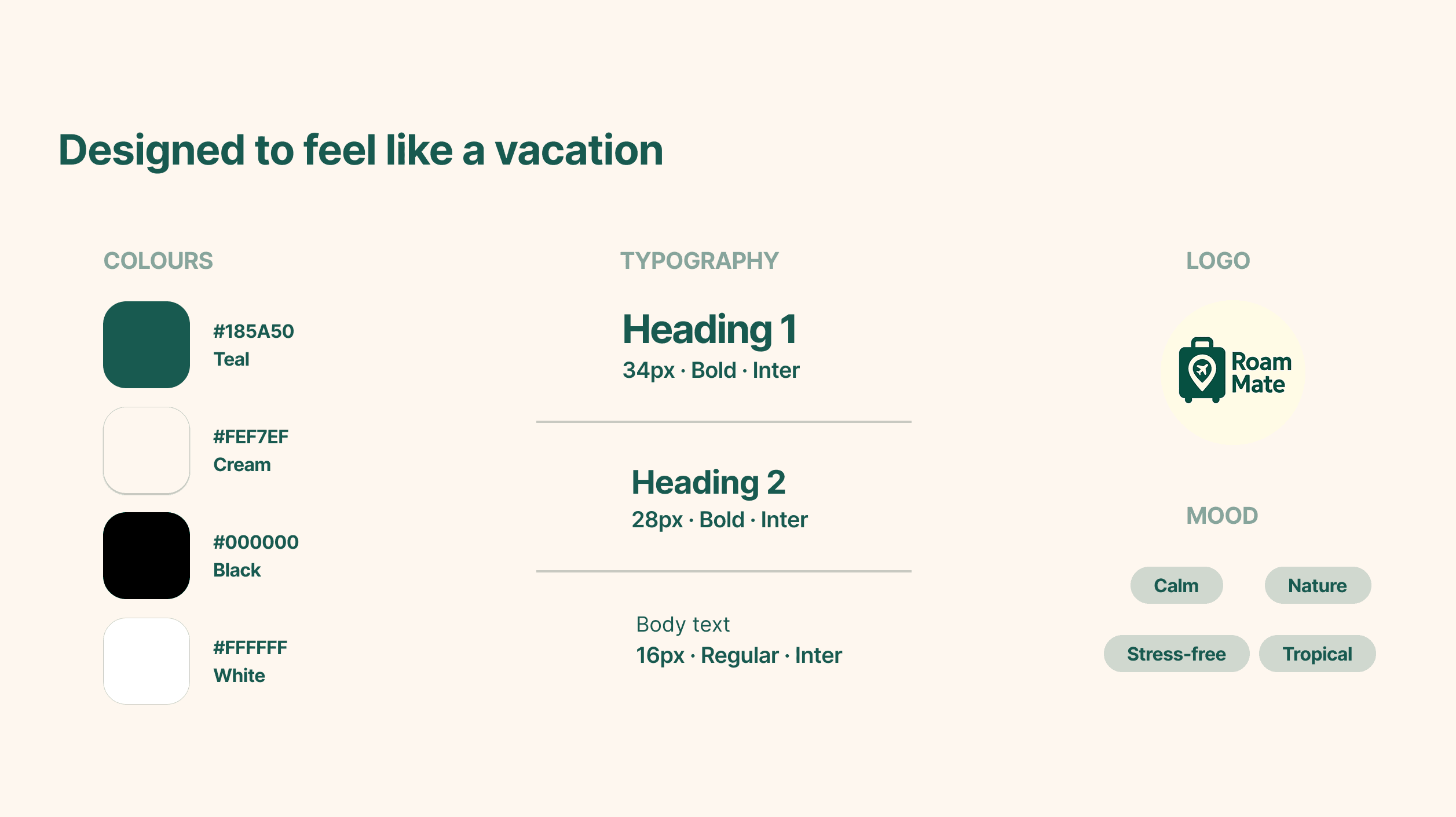
The greens came from that feeling. Clean typography to keep it stress-free. The whole thing had to feel like a place you wanted to be, not another app you had to manage.
Final Design
Here's what Roam Mate looks like in action.
Flow 1: Personalized Onboarding
When you set up a trip, Roam Mate asks what you're into — a list of preferences you pick from so the app already knows you before anything goes wrong.
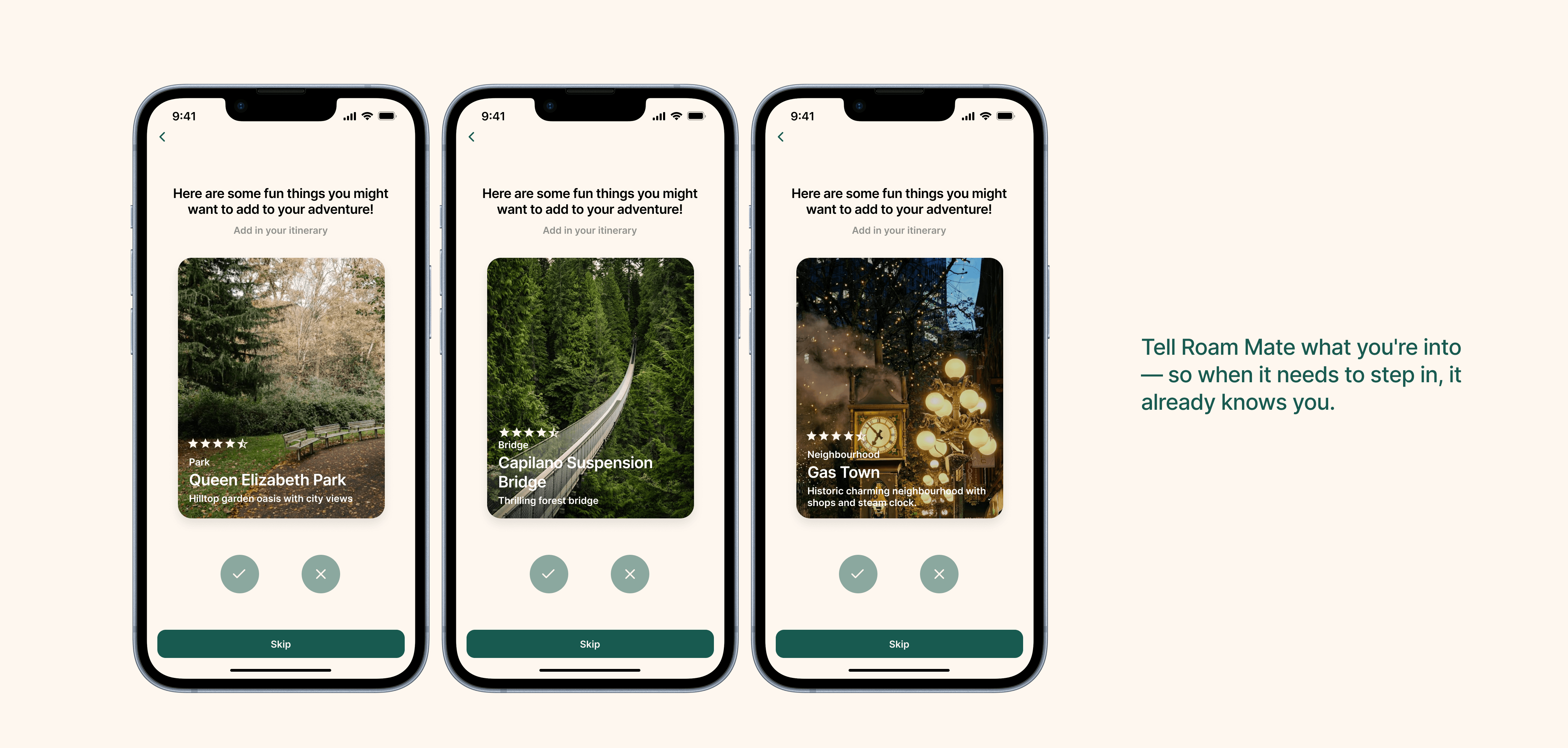
That way, when it does need to step in, it's not guessing.
Flow 2: Trip Setup
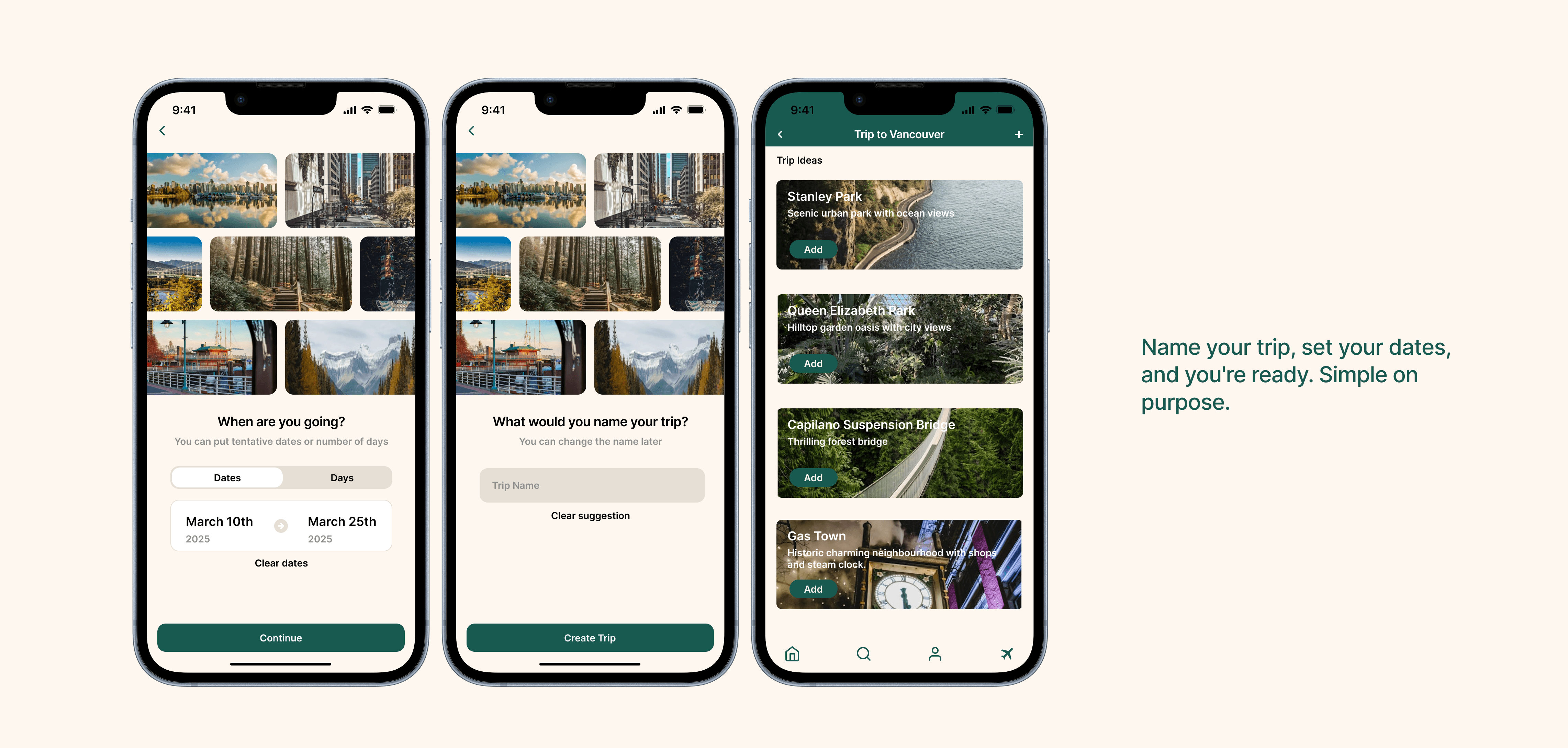
You name your trip, set your dates, and you're ready to go. Simple on purpose, the less friction at the start, the better.
Flow 3: Plan B in action
Say you are in Vancouver, headed to Stanley Park. It starts raining. Roam Mate sends a notification — your plan might not work today, want a Plan B?
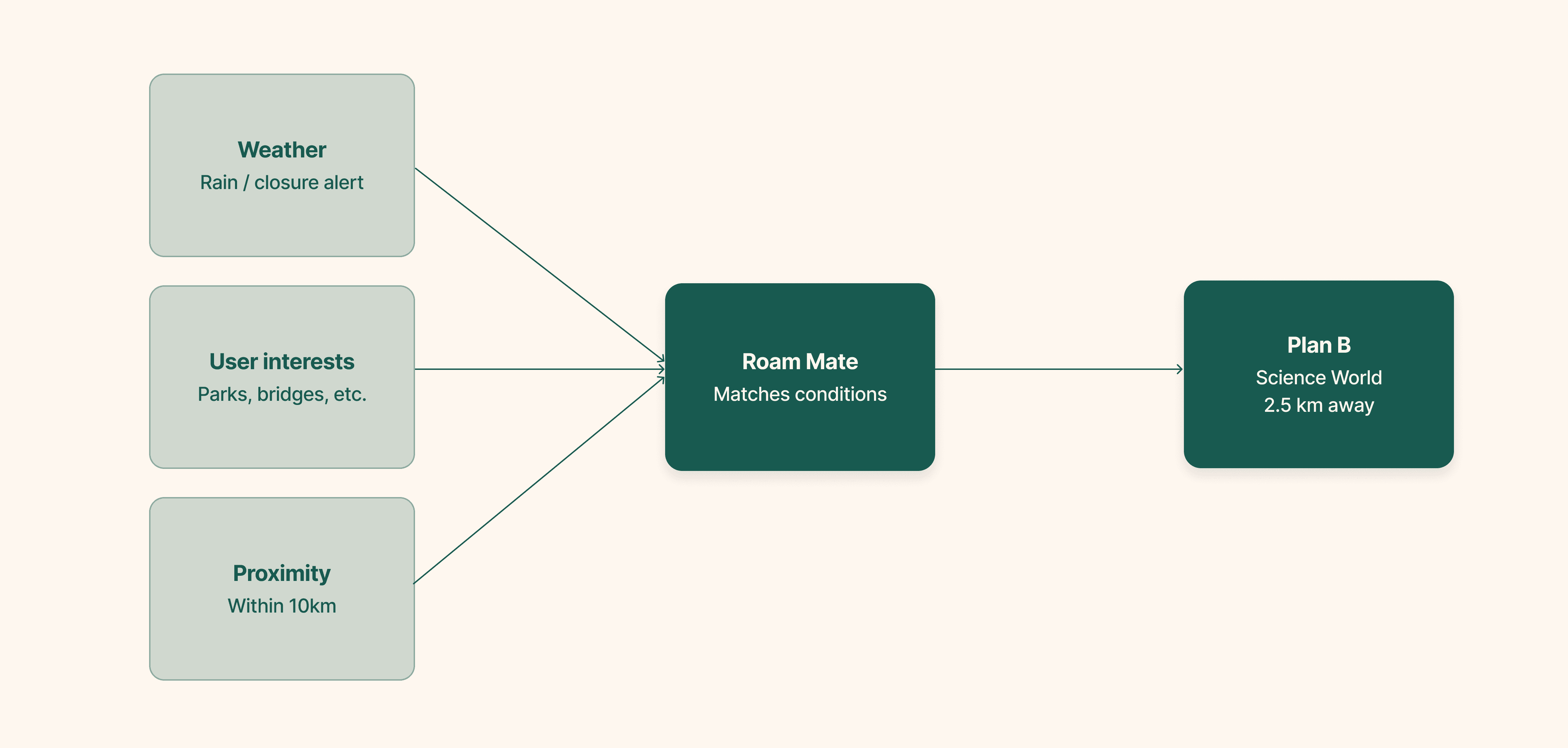
The suggestions it serves up are not random. They are based on what you told it you liked, and what is actually close to where you are right now. Each option comes with the address, hours, distance, a description, and why Roam Mate thinks you'll enjoy it.
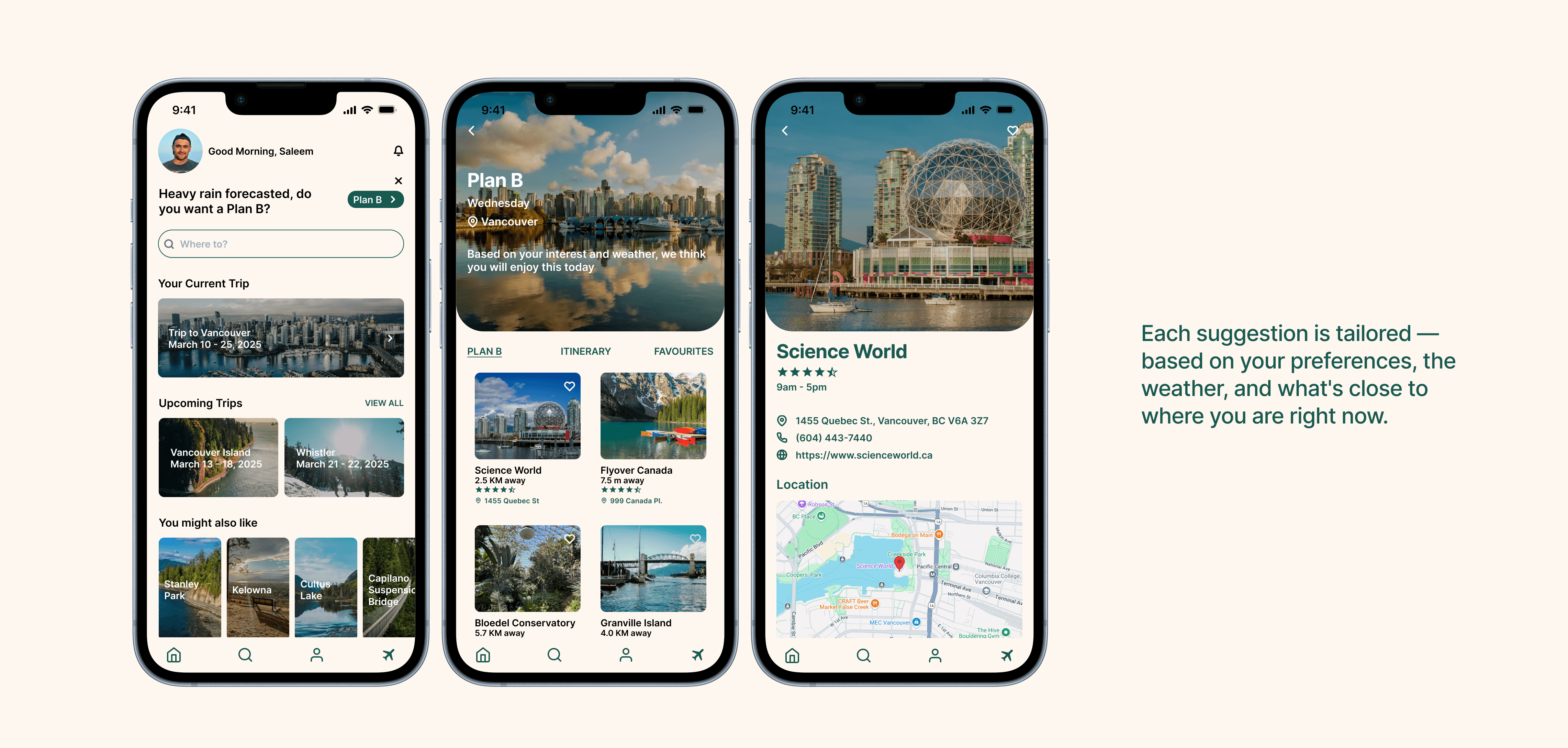
Not a panicked scramble. An informed decision.
Reflection
This project taught me two things I didn't expect.
The first was how strong the pull is to jump straight to solutions. I caught myself doing it more than once — wanting to design before I had really understood the problem. Slowing down and sitting with the research made all the difference.
The second came later, when I was reading more about product design. I realized the biggest barrier to a Plan B isn't finding a location — it's the cognitive load of making a decision when you're already stressed. That reframed everything. The UI had to prioritize speed to decision over amount of information.
If Roam Mate were a real product, I would measure success by how quickly users activated Plan B and whether they actually followed through on the suggestion — not just how many downloaded the app. If I were to build the next version, this is how the logic engine would work.
Next Steps
The next version of Roam Mate would include a real-time map highlighting events, festivals, and activities nearby.
I would also add a more sophisticated Plan B logic engine that shows users exactly why a suggestion was made for them.